Employee turnover drains company resources, with replacement costs averaging 50% to 200% of an employee’s annual salary, according to Gallup research. Forward-thinking leaders recognize that investing in employee well-being reverses this trend. Wellness programs stand out as a strategic tool to foster loyalty, reduce absenteeism, and generate substantial savings.
This guide delivers practical wellness program ideas for employees designed to enhance retention and optimize costs. As HR professionals and executives seek proven solutions, we focus on initiatives that deliver tangible ROI. You will discover actionable strategies, from comprehensive mental health support to innovative fitness incentives, all supported by industry data and real-world case studies.
Expect a curated listicle of 10 high-impact wellness program ideas for employees. Each includes implementation steps, expected benefits, and metrics for success. Whether you manage a small team or a large enterprise, these recommendations equip you to build a healthier, more committed workforce. Start transforming your retention rates today.
The Proven ROI of Employee Wellness Programs
Employee wellness programs deliver proven returns on investment (ROI), making them essential for HR leaders focused on retention, health, engagement, and cost reduction. Recent 2026 data reveals organizations save $3.27 in healthcare costs for every $1 invested, driven by preventive measures that lower claims and chronic conditions. Additionally, 72% of employers report healthcare cost reductions after implementation, according to analyses from Wellable and Select Software Reviews. These figures underscore how targeted programs, like those integrating physical activity challenges and mental health support, yield tangible financial benefits while fostering a culture of wellness.
Productivity gains further amplify ROI, with participants experiencing up to a 20% increase in output and 56% fewer sick days. This directly supports employee retention, as high well-being cultures boast 64% higher retention rates compared to low-well-being environments. HR professionals can leverage these outcomes by tracking metrics like absenteeism and performance pre- and post-program launch, ensuring alignment with engagement goals.
Beyond ROI lies value on investment (VOI), encompassing cultural shifts and sustained engagement. Gamified programs achieve 70-88% participation rates, building stronger company cultures and mitigating the $183 billion annual U.S. loss from financial stress-related productivity dips. Actionable steps include incorporating leaderboards, rewards, and multi-faceted tracking for physical, mental, and financial wellness.
A benchmark case is Johnson & Johnson, which realized $250 million in savings over a decade, equating to $2.71 returned per $1 invested (Well-Being Excellence Report). For HR and population health managers, this positions wellness as a strategic imperative, customizable via adaptive platforms to drive measurable outcomes in retention and cost savings.
Physical Wellness Program Ideas
- Gamified Walking or Step Challenges with Leaderboards and Wearable Syncs Implement gamified walking challenges to boost physical activity through competition and technology integration. Sync wearables like Apple Watch for automatic step tracking, leaderboards, badges, and team tiers to create excitement. These programs often feature multi-week formats with progressive goals, such as starting at 5,000 steps daily for beginners and ramping up. Research shows up to 88% engagement rates, as demonstrated by Tata Motors’ initiative where participants averaged 7,600 daily steps, a 6% increase, alongside widespread meal logging. Actionable steps include launching monthly team contests with prizes, which can yield $3.27 in healthcare savings per $1 invested while enhancing engagement and retention. Employees in such programs take 23% more steps during competitions, reducing absenteeism by up to 56% through sustained habits.
- Virtual Marathons or Couch to 5K Programs for Remote Teams Virtual marathons and Couch to 5K plans perfectly suit hybrid workforces by enabling global, asynchronous participation via apps that log runs, walks, or bike miles. Pair these with health screenings for BMI and cholesterol, plus nutrition logging tools for personalized feedback. Programs foster hybrid inclusion with real-time leaderboards and weekly progress shares, driving 3x participation growth in some global teams. For instance, structure Couch to 5K with coached ramps from sedentary baselines, integrating water intake and macro tracking. HR professionals can subsidize screenings and use data for tailored plans, cutting healthcare costs with 72% of employers reporting reductions. These initiatives improve employee health metrics, like BMI drops from 30 to 27, while building a culture of wellness that boosts retention.
- Ergonomic Assessments and Annual Physicals for Hybrid Workers Address hybrid work risks with remote ergonomic audits, desk setup guides, posture workshops, and subsidized standing desks to prevent injuries. Combine with annual physicals covering BMI, cholesterol, blood pressure, and glucose for preventive insights. Tailor interventions like strengthening exercises for poor home offices, reducing musculoskeletal issues that cause absenteeism. Structured programs deliver 40% fewer sick days and 3:1 ROI by lowering claims. Start with virtual assessments via video calls, followed by follow-up tracking. This approach not only slashes injury-related absences but also strengthens employee engagement and loyalty, aligning with 2026 trends in hybrid wellness.
1. Gamified Step Challenges
Gamified step challenges stand out among wellness program ideas for employees by transforming routine physical activity into thrilling, competitive events that drive engagement, retention, and health outcomes. Integrating wearables like Apple Watch, Fitbit, or Garmin enables real-time step tracking and seamless syncing to a centralized platform, eliminating manual logging. This setup powers team competitions, where departments battle on leaderboards for virtual milestones, such as collectively “walking” global routes. Wipro’s implementation across 30+ countries delivered a 3x participation surge, from 163 to 550 active users, with an 84% total step increase, proving the formula’s impact on employee health and culture.
Rewards amplify success; offering extra PTO or wellness stipends yields 92% effectiveness in participation, per large firms’ data, far exceeding average 30-35% usage rates. Actionable tip: Structure tiered incentives, starting with badges for consistency and escalating to time-off for top performers, boosting accountability and motivation.
FitLyfe’s adaptive platform dashboards track key metrics like daily active users, average steps (aim for 7,000-10,000), and health trends, quantifying ROI through reduced absenteeism (up to 56% fewer sick days) and healthcare savings ($3.27 per $1 invested). HR leaders gain actionable insights to refine programs, fostering sustained wellness and cost efficiencies.
2. Virtual Fitness Events
Virtual fitness events rank high among wellness program ideas for employees, delivering scalable engagement for remote and hybrid teams while boosting retention and reducing healthcare costs. These tech-driven initiatives foster a culture of wellness by uniting global workforces in shared challenges, with platforms enabling real-time tracking, leaderboards, and rewards to achieve up to 88% participation rates.
1. Host Couch to 5K or Marathon Relays for Global Accessibility. Launch Couch to 5K programs to guide beginners through 8-10 weeks of progressive app-led runs, logging via wearables for worldwide participation without venues. For advanced groups, organize marathon relays where teams accumulate virtual mileage, like traversing continents on interactive maps. Ideal for remote employees, these build camaraderie across time zones, with 97% of participants noting mental health gains and 138% activity spikes corporate wellness trends.
2. Integrate Nutrition Challenges with App-Based Logging. Pair events with holistic nutrition tracking in unified apps, where users log meals and hydration alongside steps for balanced physical health. Add virtual cooking sessions or “superfood” goals to sustain motivation, yielding $3.27 in healthcare savings per $1 invested.
3. Track Success via BMI and Cholesterol Screenings. Measure outcomes through pre- and post-event biometric screenings, targeting 75% participation to benchmark BMI reductions and cholesterol improvements. Platforms provide dashboards for ROI analysis, linking to 56% fewer sick days and 20% productivity gains virtual wellness programs. FitLyfe’s flexible platform streamlines this for measurable wellness advances.
3. Ergonomic Hybrid Work Assessments
Ergonomic hybrid work assessments emerge as a top wellness program idea for employees, particularly for desk-bound roles in hybrid environments. These evaluations, offered virtually via AI-powered apps and video calls or on-site by certified ergonomists, analyze posture, monitor height, and keyboard alignment to mitigate risks like neck strain affecting 45-60% of remote workers. Pair them with adjustable equipment stipends of $200-$1,000 annually, covering sit-stand desks, lumbar chairs, and footrests, enabling quick home office upgrades compliant with OSHA expectations for remote ergonomics.
This approach slashes musculoskeletal disorder (MSD) claims by up to 20% and treatment costs by 30%, as seen in sectors with rising hybrid claims (937,620 U.S. cases in 2023-2024 costing $213 billion yearly). For HR leaders, it bolsters retention by reducing absenteeism and boosting satisfaction among IT and admin staff, fostering a culture of care that cuts turnover in high-risk roles.
Sustain gains through quarterly check-ins via surveys and video reviews, tracking posture habits like the 20-20-20 rule and microbreaks. Integrate into platforms for reminders, yielding 5% lower workers’ comp frequency and enhanced engagement. Leverage evolving hybrid ergonomic strategies to drive measurable health cost savings and loyalty.
Mental Health and Resilience Programs
- Guided Meditation via Apps and Stress Workshops Guided meditation through integrated apps and targeted stress workshops represent powerhouse wellness program ideas for employees, directly tackling the 46% burnout rate prevalent among modern workforces. These proactive measures foster mental resilience by teaching self-regulation techniques, with clinical trials demonstrating significant drops in perceived stress (up to 0.85 Cohen’s d effect size) and burnout symptoms after just eight weeks of daily 10-minute sessions. Proactive coaching amplifies results, pairing app-based guidance with workshops that address root causes like workload overload, leading to sustained improvements in engagement and mindfulness. For HR professionals, platforms like FitLyfe enable seamless customization, syncing meditation modules with live virtual workshops to boost participation rates toward 70-88%. Companies implementing these see 20% productivity gains and reduced healthcare costs, as employees report 56% fewer sick days. Start by piloting bi-weekly workshops with app access, tracking adherence via dashboards for optimal ROI of $3.27 saved per dollar invested. Explore burnout statistics.
- Mood Tracking and Digital Detox Challenges Mood tracking tools combined with digital detox challenges elevate wellness program ideas for employees by normalizing emotional check-ins and combating digital overload, dramatically boosting Employee Assistance Program (EAP) utilization beyond the typical 2-6% average. These initiatives reduce stigma through daily nudges and team-based unplug rituals, with forward-thinking programs achieving 42-87% activation rates and up to 600% utilization increases. Participants experience improved sleep, clarity, and stress relief, as detoxes cut screen time and pair with mood logs to preempt burnout. FitLyfe’s adaptive platform gamifies these with leaderboards and rewards, fostering a culture of wellness that enhances retention by 64% among high-wellbeing teams. Actionable steps include launching 30-day detoxes with peer accountability, integrating EAP links for seamless access, and measuring via pulse surveys. This approach not only cuts absenteeism by 27% but also drives engagement, proving essential for population health management.
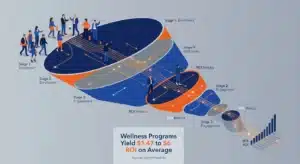
- Mental Fitness Days with One-on-One Sessions Mental fitness days, featuring dedicated recovery time and personalized one-on-one coaching sessions, stand out as transformative wellness program ideas for employees, achieving up to 90% burnout reduction through recognition and habit-building. These proactive “mental fitness” strategies shift from reactive care to resilience training, with bootcamp-style sessions yielding 40% gains in mental toughness and 25-40% lower turnover. Recognition elements, like peer acknowledgments, build psychological safety, aligning with 86% of employers investing in mental health services. Via FitLyfe, customize these days with AI-personalized coaching and metrics tracking, ensuring 88% engagement in hybrid formats. Implement by allocating quarterly paid days off, followed by sessions focused on empathy and workload balance, resulting in $1.47-$6 ROI per dollar. Review 2025 workforce burnout survey. This paves the way for holistic wellness ecosystems.
4. App-Based Meditation and Coaching
App-based meditation and coaching programs rank among the most effective wellness program ideas for employees, delivering scalable mental health support that boosts engagement by up to 88% and reduces burnout, which affects 46% of workers. These platforms offer daily guided sessions personalized by AI, adapting content to individual stress triggers, sleep patterns, and goals for sessions as short as 5 minutes. Pairing this with manager training achieves 86% adoption of mental health services, as leaders learn to recognize signs, promote usage, and model behaviors, fostering a culture of wellness.
Integrated mood journals enable tracking via simple daily logs, generating analytics to spot trends like rising anxiety early, allowing HR to intervene proactively and prevent $322 billion in annual burnout costs.
Incentivize completion with wellness points redeemable for perks like gift cards or extra PTO; 92% of large firms find such rewards highly effective, driving sustained participation and 20% productivity gains. FitLyfe’s adaptive platform streamlines this, customizing for your workforce to measurably improve outcomes and retention. The mental health apps market is projected to reach $22.73 billion by 2030, underscoring their ROI of $3.27 saved per $1 invested.
Learn more on market growth and projections.
5. Digital Detox and Mood Tracking
Digital detox and mood tracking programs stand out among wellness program ideas for employees, directly tackling hybrid work loneliness while boosting engagement, retention, and perceived organizational care. Implement weekly unplugged challenges, like 48-hour device-free weekends or screen-free evenings, with group accountability through team leaderboards and virtual check-ins. This combats isolation, which impacts 25% of remote workers daily compared to 16% on-site, fostering camaraderie and reducing blurred work-life boundaries. Pair participants in cross-functional groups for friendly competitions, offering incentives like wellness points for top streaks; one study found such detoxes cut anxiety by 16.1% and depression symptoms by 24.8% (NPR digital detox study).
Enhance these with pulse surveys: short, weekly mood check-ins via apps to capture real-time stress and energy levels. This proactive feedback loop addresses issues instantly, lifting perceived care from a 41% baseline as employees feel truly heard. Analyze trends, such as post-detox mood dips, to refine challenges and demonstrate commitment.
Finally, pair with resilience workshops on boundary-setting and self-compassion, using survey data to tailor content. This synergy delivers a 56% engagement uplift, slashes sick days by up to 56%, and supports retention amid rising healthcare costs, creating a resilient culture.
Financial and Social Wellness Initiatives
- Retirement Planning and Student Loan Support Sessions Retirement planning and student loan support sessions rank among the most impactful wellness program ideas for employees, directly combating the $183 billion annual productivity loss from financial stress, where workers lose seven hours weekly to worries. In 2026, 70% of employers prioritize these initiatives, up from 59% in 2024, offering workshops on SECURE 2.0 tools like emergency savings linked to 401(k)s and tax-free student loan assistance up to $5,250 yearly. These sessions boost loyalty, with 84% of participants pursuing financial resolutions, and address younger workers’ low confidence, where only 12% aged 25-35 feel secure. HR leaders can implement via adaptive platforms that track engagement, yielding 72% healthcare cost reductions and higher retention. Actionable step: Schedule quarterly virtual sessions with personalized budgeting tools to maximize employer match utilization, a top priority for two-thirds of workers.
- Volunteer Days and Social Clubs Volunteer days and social clubs, such as hiking groups or book discussions, excel as wellness program ideas for employees by fostering connection amid 54% adult loneliness rates, especially for remote workers facing 40% higher turnover risk. Paid volunteer opportunities like charity walks or park cleanups saw 77% participation growth in recent years, building culture while cutting sick days by 56%. Social clubs enhance belonging, with 81% of employers noting engagement gains and 69% improved retention post-rollout. Integrate these hybrid-friendly activities through gamified platforms for 70-88% participation. Start by surveying teams for interests, then allocate 4-8 paid days annually to drive purpose and reduce isolation.
- Lifestyle Spending Accounts for Flexible Benefits Lifestyle spending accounts (LSAs) transform wellness program ideas for employees by providing reimbursable stipends averaging $850 per employee yearly for gym memberships, therapy, or nutrition coaching, with adoption doubling to 10% of companies in 2026. These flexible benefits achieve 85% utilization, bundling wellness perks that 99% of programs include, and help offset 6.7% benefit cost hikes. Employees feel 84% more valued, supporting retention and a 20% productivity boost. Platforms streamline administration with quarterly disbursals and AI personalization. Launch with $500-1,000 pilots, tracking ROI like $3.27 healthcare savings per dollar invested to scale effectively.
Specialized and 2026 Trend-Focused Programs
- Women’s Health Resources and Sleep Optimization for Gen Z and Millennials Women’s health resources targeting fertility and menopause, combined with sleep optimization challenges, rank among the top wellness program ideas for employees in 2026, addressing critical gaps for retention and productivity. Offer comprehensive fertility support including IVF coverage, egg freezing, preconception counseling, and pregnancy loss leave; 32% of women expect infertility benefits, while maternity costs have risen 50% in a decade. For menopause, provide hormone replacement therapy access, specialist consultations, nutrition coaching, and symptom-related flexible leave, as 53% of employees seek employer support and 1 in 10 women leave jobs due to symptoms. Pair these with Gen Z and Millennial-focused sleep programs using wearables for tracking (21% of Gen Z use constantly), nap pods, hygiene education, and somatic breathwork challenges, tackling late bedtimes (45% Gen Z after midnight) and financial stress-induced insomnia (70% affected). These initiatives boost engagement to 70-88% via gamification and yield healthcare savings of $3.27 per $1 invested. HR leaders can customize via adaptive platforms for seamless integration, fostering a culture of inclusive wellness.
- Smoking Cessation Integrated with Somatic Healing Sessions Smoking cessation programs enhanced by somatic healing sessions emerge as innovative wellness program ideas for employees, tapping into the holistic wellness market projected to reach $124.3 billion by 2034. Despite declining standalone investments (31% of employers cutting back), embedding behavioral coaching, digital tools, and body-based somatic therapies like breathwork and nervous system regulation dramatically improves outcomes for Gen Z and Millennials seeking trauma release and habit-breaking. Virtual group sessions with follow-ups, paired with tobacco surcharges as incentives, tie into mental health support to reduce stigma and boost participation. This approach prevents burnout and injuries linked to stress, aligning with 56% fewer sick days from robust wellness efforts. Implement through tech ecosystems for tracking progress, achieving up to 88% engagement and supporting employee retention.
- AI-Personalized Wellness Plans via Tech Ecosystems AI-personalized plans through integrated tech ecosystems represent forward-thinking wellness program ideas for employees, ensuring continuous engagement and measurable health improvements. AI analyzes wearable data, pulse surveys, and health inputs to deliver tailored journeys like stress resets or sleep coaching, with 33% of employees acting on recommendations and 63% of HR seeing high potential. Predictive analytics flags burnout risks, matches teams for challenges, and provides concierge guidance for specialized needs, cutting turnover costs averaging $45,000 per employee. Platforms with gamification and rewards drive 20% productivity gains and 72% healthcare cost reductions reported by employers. For HR professionals, this flexibility streamlines administration while building resilience and a thriving wellness culture.
Overcoming Challenges and Implementation Tips
- Boost Utilization from 30-35% with Gamification and Adaptive Customization Average wellness program participation hovers at a disappointing 30-35%, often due to one-size-fits-all designs and overwhelming workloads. Combat this by integrating gamification elements like leaderboards, badges, and team challenges, which studies show can elevate engagement to 70-88%. Platforms like FitLyfe enable this through proprietary adaptive technology, allowing HR professionals to customize challenges for physical activity, mental health, or financial wellness based on real-time employee data. For instance, sync wearables for step competitions or tailor meditation streaks to individual preferences, fostering a culture of sustained participation. This approach not only drives retention by making wellness fun and social but also reduces healthcare costs, with ROI reaching $3.27 saved per $1 invested. Actionable step: Launch a monthly gamified challenge with points redeemable for flexible benefits to spark immediate buy-in.
- Track VOI Metrics Using Multi-Activity Dashboards for Holistic Impact Shift beyond traditional ROI to Value on Investment (VOI) metrics that capture engagement, retention, and cost savings via comprehensive dashboards. Monitor key indicators like participation rates, absenteeism reductions (up to 56% fewer sick days), and turnover drops (64% higher retention with strong wellness). FitLyfe’s secure platform aggregates data across activities, revealing trends such as productivity gains of 20% in high-engagement teams. HR leaders can compare participant versus non-participant healthcare claims to quantify savings, while self-reported surveys highlight morale improvements. This data-driven strategy justifies budgets to executives, proving wellness as infrastructure for employee health and culture. Implement by setting quarterly VOI benchmarks tied to business outcomes.
- Implement Strategically: Pilot Small, Scale with Incentives, and Use Pulse Surveys Begin with targeted pilots in one department, such as a gamified walking challenge, to demonstrate quick wins like 50% engagement lifts before company-wide rollout. Scale successfully by layering incentives, which 92% of large firms deem effective, including gift cards or premium reductions for milestones. Integrate pulse surveys weekly via adaptive platforms to gather feedback on burnout (affecting 46%) and preferences, enabling real-time adjustments. This builds psychological safety, boosts perceived care (only 41% currently feel it), and supports retention amid rising costs. For example, pilot women’s health resources, then expand based on survey insights. This phased method minimizes risk while maximizing long-term engagement and savings.
Actionable Takeaways for HR Leaders
- Prioritize 3-5 High-Engagement Wellness Program Ideas Starting with Physical Challenges Select proven options like gamified step challenges, virtual fitness events, ergonomic assessments, app-based meditation, and digital detox programs to align with employee needs for physical, mental, and social health. These initiatives, drawn from 2026 trends, drive retention and engagement by addressing hybrid work demands. Start with physical challenges, which achieve up to 88% participation through leaderboards and wearable syncs, fostering competition and habit formation. Tailor selections to your workforce demographics, such as sleep optimization for Millennials or women’s health resources, ensuring relevance boosts uptake from the average 30-35%.
- Leverage Tech Platforms for Tracking and Personalization to Reach 70-88% Participation Adopt adaptive platforms that integrate gamification, AI personalization, and multi-activity tracking to elevate engagement beyond typical rates. Seamless wearable syncs and pulse surveys enable real-time adjustments, mirroring successes where firms saw 3x participation growth. This tech streamlines administration while maximizing flexibility for evolving needs.
- Measure Success Quarterly with Targets for Cost Savings, 20% Productivity Boost, and Retention Track metrics quarterly, aiming for $3.27 healthcare savings per $1 invested, 20% productivity gains, and 56% fewer sick days. Use VOI dashboards to quantify retention improvements, as high-well-being teams show 64% better loyalty. Benchmark against industry data for accountability.
- Build a Wellness Culture Through Internal VOI Stories and FitLyfe Exploration Share success narratives via newsletters and all-hands meetings to reinforce value, highlighting productivity and cost wins. Explore FitLyfe’s single platform for customizable, integrative solutions that combine tech security with comprehensive programs, enhancing outcomes measurably.
- Next Steps: Audit, Survey, and Pilot One Idea This Quarter Conduct a program audit, employee survey for preferences, and launch a pilot like step challenges. Monitor early data to refine, setting the stage for scalable impact on health costs and engagement.
Conclusion
In summary, wellness programs combat costly employee turnover by fostering loyalty, slashing absenteeism, and delivering clear ROI, with replacement costs often exceeding 50% of annual salary. These 10 curated ideas, from mental health initiatives to fitness incentives, offer practical implementation steps, proven benefits, and success metrics tailored for teams of any size. Backed by Gallup data and real-world case studies, they empower HR leaders to drive measurable results.
Reinvest in your workforce today. Choose one high-impact program from this guide, launch a pilot, and monitor key outcomes like retention rates and savings.
Your commitment to employee well-being not only optimizes costs but ignites a culture of thriving productivity. Act now, and watch your organization flourish.