In today’s competitive talent market, companies face staggering costs from employee turnover, often exceeding 50% of an employee’s annual salary per departure. Yet forward-thinking leaders know that investing in employee wellness is not just a perk; it is a strategic imperative for boosting retention and delivering measurable ROI. The best employee wellness programs stand out by addressing physical, mental, and financial health holistically, resulting in reduced absenteeism, higher productivity, and loyalty that keeps top talent engaged for the long haul.
This listicle curates the top employee wellness programs proven to drive real results. Drawing from industry data and case studies from leading organizations, we evaluate options based on implementation ease, cost-effectiveness, and impact metrics like a 20-30% drop in turnover rates. Whether you manage a mid-sized firm or a growing enterprise, you will discover actionable insights into programs that integrate seamlessly with HR strategies.
Prepare to transform your workplace culture. By the end, you will have a clear roadmap to select and launch the best employee wellness programs tailored for maximum retention and ROI. Dive in to elevate your team’s well-being and your bottom line.
Why Employee Wellness Programs Are Essential in 2026
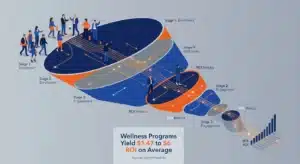
The global corporate wellness market is projected to reach $100 billion by 2026, expanding at nearly 9% annually, signaling a massive opportunity for HR and population health professionals to drive substantial ROI through best employee wellness programs. This growth reflects employer recognition that investing in holistic wellness yields returns like $3 to $6 saved per dollar spent on healthcare and productivity gains. For instance, organizations embedding wellness into their culture see measurable reductions in absenteeism and turnover, directly addressing retention challenges in competitive talent markets. Forward-thinking leaders prioritize platforms that integrate data-driven personalization to maximize these benefits, ensuring adaptability to diverse workforces.
Burnout exacts a heavy toll, costing companies $4,000 to $21,000 per employee annually in lost productivity and turnover, according to recent analyses Wellsteps. With 77% to 90% of workers experiencing symptoms, burned-out employees are twice as likely to leave, exacerbating retention issues amid hybrid work demands. Wellness programs counter this by fostering resilience through proactive mental fitness training and stress management tools. HR teams can track ROI via reduced replacement costs, often exceeding $15,000 per hire, positioning wellness as a strategic retention lever.
Employees with access to robust wellness programs report 89% better performance, while 61% describe good or thriving wellbeing compared to just 40% without such support Wellable. This ties directly to heightened engagement, with participants feeling more valued and productive. Health improvements cascade into fewer sick days and stronger team cultures, essential for building a wellness-oriented environment.
Notably, 87% of organizations now maintain formal initiatives, and 41% plan spending increases, prioritizing mental health (74%), preventive care (72%), and weight management (76%) Gethirex. These programs deliver concrete wins: 1.5 fewer sick days per employee yearly and 20% higher productivity, slashing healthcare costs and cultivating engagement. HR professionals should audit current offerings for personalization and incentives to amplify these outcomes.
Key Features Defining the Best Programs
- Hyper-personalization using AI, wearables, and biometrics for tailored coaching. Leading programs harness AI algorithms, wearable data, and biometric insights to deliver customized coaching across physical activity, mental resilience, financial planning, and life-stage needs like caregiving or women’s health. For instance, real-time stress tracking from devices syncs with apps to suggest adaptive workouts or budgeting tips based on individual goals and schedules. This approach boosts engagement by addressing unique employee profiles, with 75% of top programs integrating wearables for predictive recommendations, as noted in the Wellable 2026 trends report. HR leaders can action this by piloting AI-driven assessments to segment populations and tailor interventions, yielding 20% higher productivity. Platforms like FitLyfe enable this flexibility on a single system, ensuring scalability for diverse workforces.
- High-engagement tools like gamified challenges, incentives, and virtual options. Gamification through team challenges and incentives such as points redeemable for gift cards or premium discounts lifts program completion rates by 25%. Virtual sessions and on-demand content accommodate hybrid workers, fostering community without location barriers. Data shows 88% of employers use rewards, achieving up to 62% active participation versus the 28% industry average. To implement, launch department-based step competitions with leaderboards, tracking uplift in engagement metrics for retention gains.
- Proactive mental fitness with resilience training, apps, and manager support. Shifting beyond reactive EAPs, elite programs offer daily resilience apps, somatic training, and manager toolkits for early burnout detection. With 76% prioritizing mental health and 90% of employees reporting burnout symptoms, these yield $4 in productivity per $1 invested. Actionable steps include mandatory manager workshops and app-integrated “mental fitness days” to cut absenteeism by 1.5 days per employee annually.
- Seamless integration on single flexible platforms with analytics. Unified platforms consolidate screenings, coaching, and lifestyle tools, providing dashboards to monitor absenteeism reductions (up to 56%), risk flags, and 10-25% healthcare savings. FitLyfe’s adaptive system exemplifies this, integrating HRIS for real-time ROI tracking. Prioritize vendors with AI analytics to benchmark against baselines like $2.50-$4.20 saved per dollar, per the Sportztars ROI guide.
- Leadership buy-in and employee feedback to foster wellness culture. C-suite endorsement, with 72% involvement in top programs, paired with pulse surveys drives 9% lower turnover and embeds wellness norms. Collect ongoing input to refine offerings, boosting retention as 90% of workers value wellbeing equally to pay. Start with executive modeling, like public challenge participation, to sustain engagement and culture.
1. FitLyfe: Adaptive Platform for Personalized Wellness
FitLyfe redefines the best employee wellness programs through its proprietary FitLyfe 360 platform, an adaptive single solution that empowers HR and population health leaders to deliver hyper-personalized wellness strategies. This technology-driven ecosystem integrates biometrics, AI coaching, and comprehensive analytics to boost employee health, engagement, and retention while cultivating a robust culture of wellness. By streamlining administration and providing clear ROI metrics, it directly addresses rising healthcare costs and hybrid work challenges. Companies using such platforms report significant gains, including a FitLyfe wellness platform that supports unlimited vendor integrations for screenings and coaching, ensuring scalability across diverse demographics.
1. Proprietary Single Platform Customizes Integrative Solutions
FitLyfe’s core innovation lies in its single, HIPAA-compliant platform that customizes wellness paths using real-time biometric data from wearables or screenings, such as blood pressure, cholesterol, and BMI. AI-enhanced coaching leverages this data alongside health risk assessments (HRAs) to generate tailored action plans, including SMART goals, meal plans, telehealth sessions, and interventions for chronic conditions like diabetes, obesity, and mental health. Features like FitChallenge journeys apply the transtheoretical model for behavior change, adapting dynamically to employee progress without data loss. This personalization drives sustained engagement; for instance, employees receive proactive nudges for stress management or sleep optimization, aligning with 2026 trends where AI and biometrics enable 20% higher productivity. HR professionals can configure programs for specific needs, such as women’s health or caregiving support, fostering retention by meeting life-stage demands. The result is a holistic approach that reduces health risks and builds long-term habits.
2. Online Incentive Management Drives 25% Higher Completion Rates
FitLyfe’s incentive engine automates points for activities, screenings, challenges, and outcomes, redeemable for gift cards, discounts, or premium services, proven to increase completion by 25% compared to cash incentives. A six-week challenge study showed gift cards yielding the strongest habit formation, selected by 30% initially but delivering superior results. Customizable models, from activity-based to health-contingent, integrate with fitness apps for real-time rewards, minimizing admin while embedding wellness into company culture. This gamification boosts participation among hybrid teams, where 95% U.S. adults own smartphones for seamless access. Actionable insight: HR can tie incentives to high-priority areas like weight management (76% of employers’ focus in 2026), enhancing engagement and retention.
3. Streamlines Administration and Measures Key Outcomes
Role-based dashboards, SSO, and self-service tools simplify management, with event reminders ensuring high hybrid participation. Outcomes include $3.27 saved per $1 invested, 28% sick leave reductions, 26% lower medical costs, 18% absenteeism drops, and $264 annual per-employee savings. These metrics align with industry data showing wellness programs cut sick days by 1.5 per employee yearly. Track progress via real-time reports on healthcare cost reductions and productivity gains, critical amid 9-10% cost inflation.
4. Supports Population Health Management with Analytics
Centralized hubs manage screenings, lifestyle programs, and data analytics for risk stratification and ROI dashboards, targeting preventable spends like obesity’s $147 billion annual U.S. toll. Year-over-year insights reveal chronic disease reductions, aiding population health strategies.
5. Ideal for HR Retention Through Flexible, Secure Tech
Vendor-agnostic and brandable, FitLyfe adapts to demographics and needs, with secure PHI handling for trust. For more on its capabilities, visit FitLyfe about us. This flexibility positions it as essential for retention-focused HR in 2026.
2. Wellable: Holistic Challenges and Vendor Integration
Wellable stands out among the best employee wellness programs by offering a holistic platform that fosters employee retention, boosts engagement, and cultivates a culture of wellness while driving down healthcare costs. Its vendor marketplace and gamified tools provide HR and population health leaders with flexible integrations for comprehensive support spanning mental fitness to weight management. According to recent industry analyses, platforms like Wellable align with 2026 trends where 76% of employers prioritize weight management and 72% focus on preventive care, helping organizations achieve measurable ROI through reduced absenteeism and enhanced productivity. Wellable’s wellness platform exemplifies this through its Lifestyle Spending Account, enabling employees to redeem points for diverse services like meditation apps, nutrition coaching, and fitness trackers integrated with Apple Health or Fitbit.
Vendor Marketplace for Comprehensive Health Support
Wellable’s virtual vendor marketplace connects employees to a broad spectrum of wellness offerings, from stress management classes to GLP-1-compatible weight loss programs. This setup supports holistic health by allowing customized spending on mental fitness resources and preventive screenings, addressing the 90% burnout rate reported in recent surveys. HR professionals can streamline administration, with 88% of users leveraging incentives to lift participation by up to 25%. Actionable insight: Allocate budgets for high-demand areas like women’s health or caregiving support to tailor offerings, reducing chronic care costs that consume 90% of U.S. healthcare spending.
Gamified Challenges and Reporting for Engagement
Gamified challenges via Wellable’s Challenge Library feature team competitions, leaderboards, and on-demand classes for sleep, nutrition, and resilience training, elevating employee engagement by 70% compared to legacy systems. Robust reporting dashboards track qualitative feedback and exportable metrics, building a data-driven wellness culture. For hybrid workforces, social features and Wellable Points as a reward currency encourage sustained participation, correlating with 89% higher performance among thriving employees. Implement leaderboards segmented by department to spark friendly rivalry and monitor via bi-weekly surveys for real-time adjustments.
ROI Tracking and Multi-Generational Pros
Participation metrics automate ROI proof, showing 6:1 returns, $3.27 saved per healthcare dollar, and 1.5 fewer sick days per employee annually. Wellable’s 2026 Trends Report equips HR with strategies for cost control, noting 60% investment growth in mental health amid 77% employee burnout history. It excels for multi-generational teams, offering inclusive challenges from Boomer relaxation to Gen Z therapy apps, boosting retention as engaged workers are 87% less likely to leave. However, achieving full personalization may require custom tweaks, like adding niche exercises; start with templates and specialist support for quick wins. Recognized in top wellness software lists.
3. Personify Health: AI-Powered Content and Navigation
Personify Health stands out among the best employee wellness programs with its PercyIQ AI engine, delivering hyper-personalized content, coaching, and navigation to address mental and physical health needs. This platform analyzes biometrics, health profiles, goals, and risks to provide on-demand resources like SmartRecs for tailored media suggestions and a concierge chatbot handling 26,000+ healthcare queries. Users access 90+ videos on topics from fertility to vaping, plus 50+ digital journeys for stress reduction and nutrition, with certified coaches boosting stress score improvements by 46%. For HR leaders, this means proactive support that aligns with 90% of U.S. employers offering mental health coverage, fostering engagement without overwhelming administration. Check the Personify Health wellbeing overview for implementation details.
A key strength lies in GLP-1 weight management and chronic disease prevention, matching priorities for 76% of employers investing in these areas amid rising pharmacy costs. Dedicated journeys combat high dropout rates for drugs like semaglutide by pairing them with behavior change coaching, yielding outcomes such as A1C reductions from 12 to 6.2 points, BMI drops, and prediabetes medication discontinuation. High-risk participants achieve 6.2 percentage point gains in heart health metrics, while moderate-risk groups see blood pressure improvements. This preventive focus reduces long-term healthcare costs, with 72% of organizations prioritizing such strategies, directly supporting population health management goals.
Tailored recommendations drive 58% engagement rates, 13% above industry averages, enhancing retention through 12% lower turnover and $800 annual savings per participant. Gamified challenges and rewards like auto-milestones make participation intuitive, with 69% of employees feeling their employer cares about wellbeing. Biometrics from wearables like Oura Ring enable proactive alerts for issues like sleep gaps or vaccine needs, cultivating a wellness culture that cuts sick days by 20% and boosts productivity.
For large-scale deployments, Personify excels in serving millions across enterprises like Dow, with API integrations and a 70+ partner marketplace; smaller employers may require more customization. Explore outcomes in the Q4 2025 Innovation Impact Report. Overall, it streamlines retention, engagement, and cost control for evolving workforces.
4. GoJoe: Gamified Global Rewards System
GoJoe distinguishes itself among the best employee wellness programs through its gamified global rewards system, leveraging “move-to-earn” mechanics, team challenges, and social connectivity to enhance employee retention, engagement, and a culture of wellness while curbing healthcare costs. Supporting over 70 activity types from walking to yoga, it integrates wearables, GPS, and manual logging across 150+ countries and 35+ languages, ensuring inclusivity for diverse demographics. HR leaders can deploy unlimited customizable challenges with leaderboards, virtual maps, and push notifications, fostering camaraderie in remote and hybrid environments. Stanford-backed analytics provide ROI insights, such as absenteeism reductions and productivity gains, aligning with 2026 trends in virtual incentives. For details on its impact, see GoJoe’s key features.
Gamification and team challenges boost engagement, ideal for remote and hybrid employee retention. Features like interactive clubs, chat groups, and streamed workouts (e.g., 350+ Les Mills classes) drive 90% average engagement during challenges, five times the industry retention rate. Case studies highlight NatWest re-engaging 40% of its global workforce and PwC achieving 92% participation. Sedentary users see 75% exceeding WHO exercise guidelines, with 92% reporting higher positive intent toward employers. HR professionals can action this by launching monthly team journeys with expert-guided programs, directly supporting retention amid hybrid work.
Rewards system incentivizes sustained participation, linking to health improvements and culture building. Year-round redeemable rewards from 3,000+ brands like Amazon double for healthy habits, yielding 400% activity surges and 63% physical wellbeing gains post-challenge. Employees report 60% mental and 54% social improvements, with 82% feeling more connected and 67% viewing employers positively. This sustains participation beyond events, building wellness culture; actionable steps include team incentives to maintain momentum.
Global reach supports diverse demographics, with analytics for ROI on costs and productivity. Inclusive points weighting accommodate all fitness levels, while 24/7 multilingual chat aids adoption. Dashboards track trends, proving 10% absenteeism drops (e.g., NatWest) and lower insurance claims, offsetting rising costs like GLP-1 drugs.
Aligns with trends in incentives and virtual activities for high completion rates; strong for fun-driven wellness but may need supplements. GoJoe’s 94% user preference fits 2026’s gamified, hybrid focus, with 40% stress reductions. Pair it with clinical tools for comprehensive management, maximizing outcomes in engagement and savings.
5. Woliba: Broad 12-Pillar Wellness Coverage
Woliba distinguishes itself among the best employee wellness programs with its expansive 12-Pillar Wellness framework, delivering comprehensive support across physical, mental, emotional, nutritional, social, intellectual, occupational, financial, spiritual, environmental, purpose, and longevity dimensions. This science-backed model, rooted in the Transtheoretical Model of behavior change, promotes holistic employee wellbeing by addressing interconnected needs, including dedicated financial wellbeing for budgeting and debt reduction, which alleviates stress impacting 70-80% of health issues. Women’s health integrates seamlessly into physical wellbeing and longevity pillars through adaptive resources like preventive care, nutrition plans, and coaching for reproductive or menopause support. HR leaders can leverage this breadth to foster sustained engagement, with 89% of employees reporting better performance when wellbeing is prioritized, according to recent Wellhub data. By nurturing the whole person, Woliba creates ripple effects, such as improved nutrition enhancing mental clarity and reducing burnout, which affects 77% of workers.
Flexible Modules Adapt to Life-Stage Needs, Enhancing Engagement and Retention
Woliba’s modular system offers customizable challenges, on-demand resources, surveys, and gamified events tailored to generational and life-stage differences, from Gen Z’s mental fitness focus to Boomers’ longevity habits. For instance, peer recognition and hydration challenges boost participation across demographics, while personalization via employee feedback drives retention; programs like these cut turnover by linking wellbeing to loyalty. Case studies highlight impact: Richardson Industries built habits and tracked health trends, while Spring Oaks Capital reduced risks through biometrics and HRAs. Actionable step: HR professionals should segment modules by demographics during rollout to maximize uptake, aligning with 2026 trends where flexible ecosystems meet hybrid workforce demands.
Data-Driven Insights Reduce Healthcare Costs Through Preventive Focus
Advanced analytics and AI deliver anonymized insights on risks, engagement, and trends, enabling proactive interventions like sleep tracking to prevent chronic conditions. This preventive emphasis yields ROI, with wellness programs slashing absenteeism by 16%, sick days by 1.5 per employee annually, and healthcare costs by 4.5-72%, particularly via financial wellness. Population health managers gain dashboards for benchmarking, supporting 72% of employers prioritizing preventive care in 2026.
Building a Culture of Wellness with Community and Manager Tools
Social features, team events, and manager dashboards cultivate belonging, tracking DEI metrics and leadership development. The Purpose & Contribution pillar encourages volunteering, reinforcing community as a protective factor against disease.
While comprehensive, Woliba’s scope risks overwhelming users without its intuitive streamlining and nudges; G2 reviews praise its ease for seamless adoption. For HR targeting retention and cost savings, pilot the 12 pillars with high-engagement modules first.
2026 Trends Elevating Top Programs
- Shift to Analog Human-Centric Elements Like Wellness Hubs Alongside AI for Balanced Mental Fitness The best employee wellness programs in 2026 balance cutting-edge AI with analog, human-centric features to combat digital fatigue and build proactive mental resilience. Employers report 74% prioritizing mental health investments, with 76% focusing on resilience tools like manager training and mental fitness days that normalize discussions on anxiety and sleep. Wellness hubs emerge as vital third spaces, boasting 74% weekly engagement rates as social anchors for hybrid teams fostering community support. AI complements these by detecting burnout through wearables and delivering tailored meditation pathways, all while emphasizing data privacy to build trust. HR leaders can action this by integrating hub-based group sessions with AI-driven personalization, yielding 89% better employee performance and reduced absenteeism. This hybrid approach drives retention and engagement in a multi-generational workforce.
- Boom in GLP-1 Coverage (43% of Large Firms) Paired with Coaching to Manage $1,000/Month Drug Costs With 76% of employers ramping up weight management priorities, 43% of large firms now cover GLP-1 medications like those for weight loss, yet monthly costs averaging $1,000 challenge budgets. Top programs pair coverage with mandatory lifestyle coaching, dietitian support, and prior authorizations, adopted by 34% of firms to curb premiums rising 6-14%. This integration aligns with preventive care focuses (72% priority), enhancing long-term outcomes through behavior change over drugs alone. Population health managers should track usage, which exceeds expectations in 59% of cases, and layer in exercise challenges for sustained ROI. Such strategies not only control healthcare costs but also boost overall wellness culture.
- Decline in On-Site Fitness (33%), Rise in Virtual Personalization for Hybrid Work On-site fitness investments drop to 33% as hybrid models dominate (52% hybrid, 26% remote), shifting focus to virtual tools amid mismatched work preferences stressing 39% of employees. The best programs leverage AI for personalized workouts and nutrition, with 62% using wellness apps weekly and 41% crediting them for motivation. Physical activity remains key (78% weekly), now gamified for remote accessibility. Actionable step: Deploy on-demand challenges via single platforms, reducing sick days by 1.5 per employee annually and supporting hybrid retention.
- 59% Employers Cost-Cutting Yet 60% Expect Wellness Spend Rises, Prioritizing ROI Metrics Despite 59% of employers implementing cost cuts amid macroeconomic pressures, 60% anticipate wellness spending increases, targeting high-ROI areas like preventive health. ROI tracking via dashboards shows 82% of leaders reporting positive returns, including 30% exceeding 100% through lower absenteeism and healthcare savings. Incentives boost completion by 25%, while 70% factor metrics into decisions. HR professionals should prioritize monthly CEO updates and employee feedback loops to justify budgets and expand value to engagement.
- Gen Z/Millennial Demands for Therapy Apps and Ethical Data Use Drive Platform Evolution Gen Z and millennials, facing 90% burnout rates, demand therapy apps (46% engagement) and ethical data practices, with 72% Gen Z using apps weekly. Platforms evolve to unified ecosystems offering self-guided somatic healing and transparent wearables, as 95% view health as interconnected. This drives 61% thriving wellbeing versus 40% without programs. Implement inclusive, flexible tools prioritizing privacy to retain talent, where 59% Gen Z would quit absent support.
Proven ROI: Retention, Health, and Cost Impacts
- Wellness Programs Cut Sick Days by 1.5 per Employee per Year, Boosting Retention and Productivity by 20% Top employee wellness programs deliver immediate ROI by reducing absenteeism. Data shows these initiatives cut sick days by an average of 1.5 per employee annually, freeing up valuable time and resources. This directly supports retention, as healthier employees are 34% more likely to stay long-term, while productivity surges by up to 20% in companies prioritizing wellness. For HR leaders, this means fewer disruptions and higher output; one study links regular health screenings to $2.73 saved per dollar invested in absenteeism reductions. Actionable step: Implement preventative care screenings and track participation to quantify gains in your workforce.
- Mental Fitness Programs Reduce 90% Burnout Symptoms, Saving $4,000-$21,000 per Employee Burnout affects 90% of employees in the past year, costing $4,000 to $21,000 annually per person in lost productivity and turnover. The best employee wellness programs shift from reactive support to proactive mental fitness, including resilience training and mindfulness, slashing symptoms by up to 90%. This recaptures 3.4 fewer sick days per employee, worth $847 on average, plus avoids $7,800 per crisis incident. Population health managers see 4:1 ROI from such investments. Start by offering app-based coaching and measure stress reduction via pulse surveys for clear justification.
- 61% Thriving Wellbeing Drives Lower Healthcare Costs and Higher Engagement Employees in structured wellness programs report 61% good or thriving wellbeing, compared to 40% without, correlating to 72% healthcare cost reductions. This yields $3.27 to $6 saved per dollar invested, alongside 16% higher engagement and 89% better performance. Thriving teams foster a culture of wellness, with 79% feeling supported at work. HR professionals can leverage this for retention; 97% of CEOs confirm productivity gains. Prioritize integrated physical-mental support and monitor engagement scores quarterly.
- Leverage Analytics for Absenteeism, Risk Reduction, and Culture Metrics Justify wellness investments with data: Track pre- and post-program absenteeism, healthcare risk trends like ER visits, and culture via engagement surveys. Correlate participation to 9% lower turnover rates and sustained engagement over 90 days. Use AI dashboards for absenteeism drops and psychological safety metrics. This approach convinces leadership, as 58% of CEOs increase funding with KPI-linked reports. HR tip: Pair wearables with sentiment analysis for holistic ROI visibility within 3-5 years.
- HR Case: 77% Employees Faced Burnout; Top Programs Yield Population Health Gains With 77% of employees experiencing burnout, HR must act; elite wellness programs deliver 25% healthcare drops, 56% absenteeism cuts, and 29% retention uplift. These create measurable population health improvements, generating $7.95 million annual value per 1,000 employees. Focus on holistic platforms for sustained outcomes. Build buy-in by presenting dashboards tying wellness to business KPIs, ensuring a resilient, engaged culture that reduces costs long-term.
Actionable Takeaways for HR Leaders
- Assess Current Programs and Pilot FitLyfe for Customization. Begin by auditing your existing employee wellness initiatives against key benchmarks: hyper-personalization via AI and wearables, robust incentive systems, and precise ROI tracking for absenteeism and costs. Top programs achieve 25% higher completion rates with tailored coaching across physical, mental, and financial health. Pilot FitLyfe’s adaptive single platform to customize solutions dynamically, integrating biometrics and feedback for your workforce’s unique needs. This step uncovers gaps and demonstrates quick wins in engagement and retention.
- Secure Leadership Buy-In with Market Projections. Present compelling data to executives: the global corporate wellness market hits $100 billion by 2026, with 41% of employers planning spending increases amid 9% annual growth. Emphasize how proactive investment cuts burnout costs ($4,000-$21,000 per employee yearly) and boosts productivity by 20%. Frame FitLyfe as the flexible tool to capitalize on this trend, aligning with priorities like mental health (74% focus) and preventive care (72%).
- Launch with Targeted Employee Surveys. Start implementation by surveying staff on wellness gaps in retention, health, engagement, and culture. Use responses to personalize offerings, such as resilience training or life-stage support, ensuring 61% report thriving wellbeing versus 40% without programs. This builds buy-in and tailors FitLyfe’s platform for sustained participation.
- Deploy Incentives and Gamification with Dashboard Monitoring. Introduce points-based rewards, gift cards, and premium discounts alongside gamified challenges to drive 25% engagement boosts. Track metrics like sick days reduced by 1.5 per employee annually via FitLyfe’s unified dashboard. Adjust in real-time for optimal ROI on healthcare costs.
- Schedule Demos and ROI Tools for Immediate Impact. Book FitLyfe demos or access their ROI calculators to model cost reductions now, targeting lower absenteeism and risks. Select the best fit for your goals, launching pilots that enhance retention and culture while adapting to 2026 trends like AI personalization.
Conclusion
In summary, the top employee wellness programs deliver transformative results through holistic support for physical, mental, and financial health. They slash turnover rates by 20-30 percent, curb absenteeism, and skyrocket productivity, as proven by industry data and real-world case studies. These initiatives prove cost-effective and simple to implement across mid-sized firms or enterprises, turning wellness into a retention powerhouse with strong ROI.
Prioritize employee well-being to build a loyal, high-performing team that drives long-term success. Take action now: audit your current offerings against this curated list, pilot one program this quarter, and track your metrics for quick wins. Your investment today secures a thriving workforce tomorrow; start building that unbreakable loyalty.