Wearable wellness technology helps organizations connect fitness devices, activity data, wellness challenges, and employee rewards through one coordinated platform.
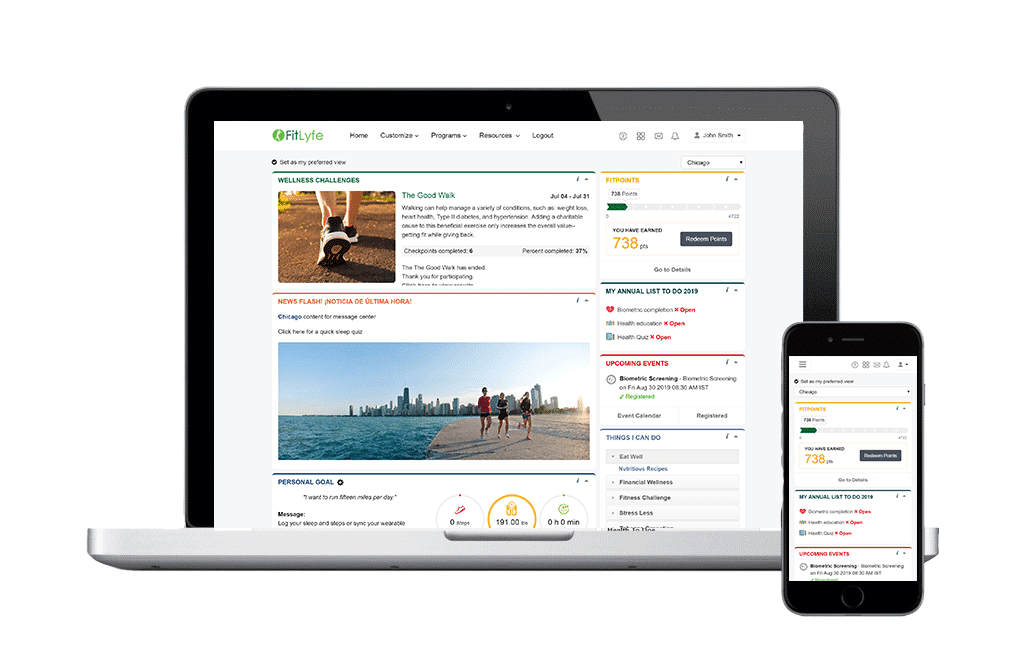
The FitLyfe 360 platform integrates with supported fitness trackers and third-party applications so participants and wellness administrators can view relevant activity information in one place.
Instead of requiring employees to enter every activity manually, connected devices can simplify tracking and provide participants with a convenient way to monitor progress toward their wellness goals.
Administrators can use approved activity data to support challenges, calculate points, monitor participation, and connect employee movement with the organization’s broader wellness strategy.
Supported Fitness Connections
FitLyfe 360 supports connections with widely used fitness and health platforms. Available integrations may depend on the organization’s configuration, device permissions, application availability, and supported data types.
- Apple Health
- Fitbit
- Garmin
- Google Fit
- Samsung Health
- Withings
- Polar
- Select iOS and Android applications
Providing multiple connection options allows employees to use devices and applications that may already be part of their routines. Organizations do not have to require every participant to purchase or use the same fitness tracker.
This flexibility can make a wellness program more accessible while giving administrators a consistent place to review approved activity information.
Cost-Effective Integration
Wearable device integration is available within FitLyfe 360, helping organizations avoid managing another platform solely for fitness-tracking information.
A connected approach can reduce the need for duplicate accounts, separate reports, manual spreadsheets, and disconnected participation records.
Administrators can manage wearable activity alongside other wellness program tools, including communications, challenges, coaching, reporting, and incentives.
This also gives organizations flexibility as their strategy changes. Programs can support different activities, device options, benchmarks, and reward structures without requiring participants to move between unrelated systems.
Wearable Wellness Technology for Program Design
Organizations choose which supported activity information is relevant to their wellness program and population-health initiatives.
Depending on the program design and available integrations, wearable information can help organizations:
- Increase wellness program participation through individual or team-based activities.
- Create friendly competitions around steps, movement, or other approved activity measures.
- Reward Wellness Health Points when participants reach established activity benchmarks.
- Track progress toward a fitness challenge or program requirement.
- Reduce the need for employees to report qualifying activity manually.
- Provide approved information to health coaches when it supports personalized wellness guidance.
- Review activity trends through wellness reporting and analytics.
The goal is not to collect every piece of information a wearable device can produce. An effective strategy focuses on the information needed to support clearly defined activities, challenges, goals, reporting, and incentives.
Participant Choice and Control
Participants opt in before connecting a supported device or application. They choose which available connection to use and authorize the supported information that can be shared with the FitLyfe 360 platform.
A voluntary approach gives participants greater control over their wellness experience. Employees who do not use wearable devices may also participate through other program activities when those options are provided by the organization.
Program communications should clearly explain what information is requested, why it is needed, and how it supports the wellness program.
Employees should also receive clear instructions for connecting, managing, or disconnecting a supported device or application.
Privacy and Security
Wearable information can include details about a participant’s activities and routines. Device integration should therefore be supported by clear consent, appropriate access controls, secure data handling, and transparent program policies.
FitLyfe 360 is designed to collect supported device information after the participant authorizes the connection. Access to wellness information can then be managed according to the organization’s configuration and the participant’s permissions.
Administrators should request only the information needed to operate the program. Limiting data collection to relevant activity measures can support a simpler experience and help maintain participant trust.
How Wearable Data Works
The wearable integration process connects approved activity information with FitLyfe 360 through six main steps:
- Activity is recorded: A participant uses a supported wearable device, fitness tracker, or third-party application to record activity.
- A connection is selected: The participant chooses which supported device or application to connect with FitLyfe 360.
- Permission is provided: The participant reviews the available permissions and authorizes the supported information that can be shared.
- The connected service processes the activity: The device or application sends approved activity information through its supported connection.
- Information appears in FitLyfe 360: Approved wearable information is displayed within the appropriate participant and administrative areas of the platform.
- Program rules are applied: Eligible challenge progress, points, or rewards can be calculated according to the organization’s wellness program settings.
Connect Activity With Incentives
Wearable wellness technology becomes more useful when activity information is connected with a clear program objective.
For example, an organization may create a step challenge, establish an activity benchmark, award points for qualifying participation, or recognize employees who consistently work toward a personal goal.
FitLyfe 360 can connect approved activity information with wellness incentive programs. This reduces manual tracking and gives participants more current information about their progress.
The program should also provide realistic and inclusive ways to participate. Employees have different physical abilities, health considerations, access to devices, job responsibilities, and personal preferences.
Alternative activities and participation methods can help more employees engage with the wellness program without making a wearable device mandatory.
Support Healthy Activity Goals
Wearable devices can make activity easier to record, but the technology should support the wellness strategy rather than become the entire strategy.
Clear goals, understandable communication, appropriate incentives, relevant challenges, and participant choice remain important parts of an effective wellness program.
The CDC physical activity guidance for adults provides additional information about recommended activity levels and the types of movement that support health.
By combining wearable connections with program management, reporting, coaching, challenges, and incentives, FitLyfe 360 helps organizations create a more connected wellness experience without requiring participants to manage multiple unrelated systems.